Epoxy & Concrete Floor Coatings Serving Virginia, West Virginia, Maryland & Pennsylvania

Author: Zackary Michael

How Much Does Garage Floor Epoxy Cost in Winchester VA

If you have been pricing garage floor coatings around Winchester, you have probably seen everything from $99 paint kits at the box store to quotes north of $5,000. That spread is confusing, but it makes perfect sense once you know what actually drives the number.

This guide breaks down realistic local pricing, what pushes it up or down, and how to compare quotes so you are looking at the same floor from every company. Every slab is different, so treat these figures as a starting point rather than a promise.

How Much Does Garage Floor Epoxy Cost in Winchester VA?

Most professionally installed garage floor coatings in the Winchester area run $4 to $9 per square foot. That puts a typical two car garage, around 400 to 500 square feet, between $2,000 and $4,500 installed, and a one car garage between $1,200 and $2,400. Exact prices vary with the condition of your concrete and the system you choose.

Those per square foot numbers should include everything: diamond grinding, minor crack repair, materials, labor, and a written warranty. When a quote comes in far below that range, something on that list is missing, and it is almost always the prep work you cannot see in the finished photos.
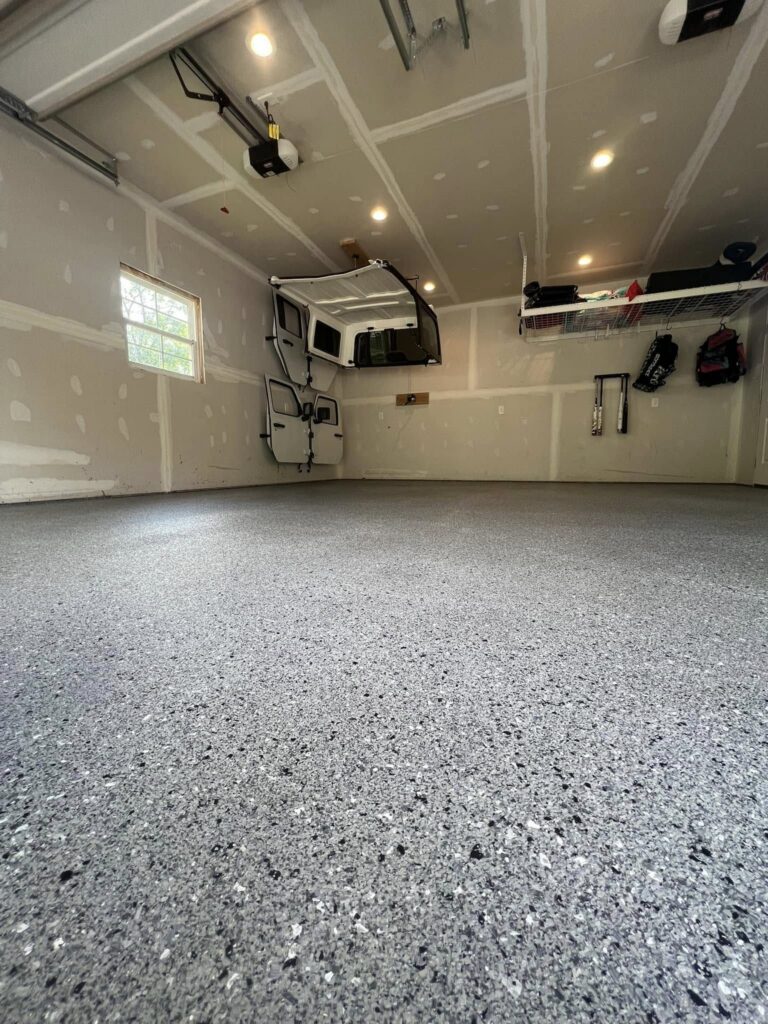
How Much Does Garage Floor Epoxy Cost in Winchester VA?, Top Gun Epoxy

What Moves the Price Up or Down

Slab condition is the biggest variable. A newer slab in good shape needs standard prep. Heavy pitting, wide cracks, old coatings that must be ground off, or high moisture readings all add labor and material. Moisture mitigation alone can add $1 to $3 per square foot, and on a damp slab it is worth every penny because it keeps the whole system attached.

Size works in your favor. Larger floors cost less per square foot because setup, travel, and equipment time get spread across more area. Layout matters a little as well: tight corners, steps, and stem walls add hand work. Extras like coated steps or a decorative border add modest cost but finish the space nicely. If the garage doubles as storage, plan a little time for moving everything out before the crew arrives too.

Common Systems and What They Run

A basic two coat epoxy in a solid color is the entry point, usually $4 to $6 per square foot. It looks clean and holds up fine in lower traffic spaces, but it shows wear sooner and can amber where sunlight hits it. Mid grade options add a third coat or a light broadcast of decorative flake for texture and looks. Sunlight through a south facing door makes ambering show up sooner, which is worth weighing before you pick the budget option.

The most popular residential choice in our area is a full flake system with a polyaspartic topcoat, typically $6 to $9 per square foot. It hides dust, shrugs off hot tire pickup, and holds its color for years. Metallic finishes and heavy duty commercial builds run higher, often $8 to $12. Again, prices vary by slab condition and product line, so get a written number.
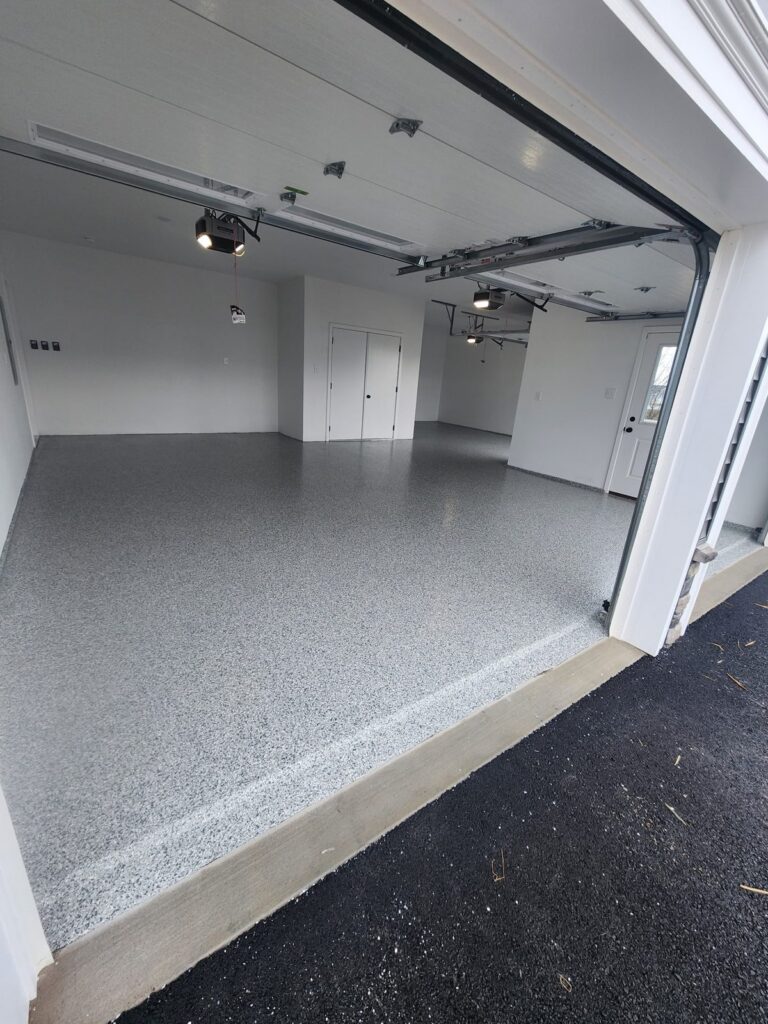
Common Systems and What They Run, Top Gun Epoxy

Why the Cheapest Option Usually Costs the Most

The $150 to $600 DIY kits are thin, water based epoxies. They go on over acid etched concrete, bond poorly, and commonly peel where your tires sit within a year or two. At that point you are paying someone to grind off a failed coating before you pay for the real floor, which costs more than doing it once.

The same logic applies to lowball professional quotes. If a company skips grinding or never mentions moisture testing, the savings come out of the part of the job that determines whether it lasts. A failed floor is not a discount. It is the full price plus a redo, spaced a year apart.

How to Compare Quotes Fairly

Get every bid in writing and make sure each one answers the same questions. How is the floor prepped? What product line goes down, how many coats, and how thick is the finished system in mils? How are cracks handled? Is the slab tested for moisture? What does the warranty cover, and for how long? A company that measures your garage in person will usually quote more accurately than one pricing off a text message.

Then look at proof: recent local jobs, photos, and reviews from Winchester area customers. When two quotes describe the same prep and the same system, choosing on price is fair. When they do not, the cheaper quote is usually describing a different, lesser floor wearing the same name.

Bottom Line

Expect $4 to $9 per square foot for a professionally coated garage floor in Winchester, with most two car garages landing between $2,000 and $4,500 depending on condition and system. Prep quality and coating choice explain almost every dollar of difference between quotes. Top Gun Epoxy provides written, itemized quotes across Winchester and Frederick County. If you want a real number for your garage instead of an internet guess, reach out and we will measure it up.

Related reading: our epoxy flake floor services, How to Prep a Garage Floor for Epoxy Coating

How to Prep a Garage Floor for Epoxy Coating
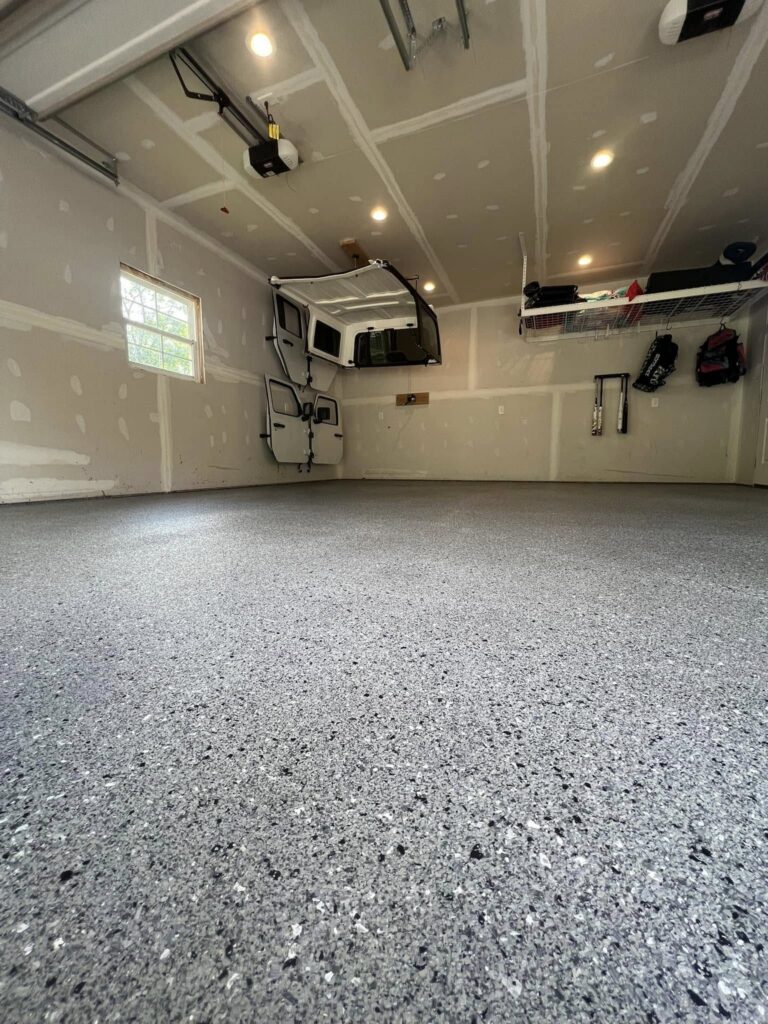
Ask anyone who installs floor coatings for a living and they will tell you the same thing: the coating is only as good as the concrete underneath it. Prep work decides whether your new garage floor lasts fifteen years or starts peeling in fifteen months.

Winchester garages run the gamut, from 1950s slabs in the older neighborhoods near Old Town to fresh concrete in the newer Frederick County subdivisions. Every one of them needs the same fundamentals handled before a drop of epoxy goes down. Here is what proper prep actually looks like.

How Do You Prep a Garage Floor for Epoxy?

Proper prep means diamond grinding the surface to open the pores of the concrete, repairing cracks and pitted spots, testing the slab for moisture, and removing every trace of dust and oil. The coating gets all the attention, but prep is what makes it bond. Most failed epoxy floors trace straight back to shortcuts at this stage.

Professionals often say prep is 80 percent of the job, and they mean it literally. On a typical one or two day installation, most of the labor hours happen before anyone opens a bucket of coating. If a company’s quote skims past prep in a sentence or two, that tells you something about how they work.

How Do You Prep a Garage Floor for Epoxy?, Top Gun Epoxy

Why Diamond Grinding Beats Acid Etching

Most DIY kits tell you to etch the floor with a mild acid solution, and that is the single biggest reason those kits fail. Etching cannot remove old sealers, paint splatter, or the weak top layer of concrete the trade calls laitance. It leaves an inconsistent surface profile, and it soaks the slab with water right before you need it bone dry.

Grinding does the job right. A walk behind diamond grinder hooked to an industrial vacuum shaves off the top layer, exposes clean concrete, and leaves a uniform texture the coating can grip. Pros call this the concrete surface profile, and coating systems are engineered to bond to it. The vacuum keeps the dust out of your garage, your house, and your lungs while it happens.

Fixing Cracks, Pits, and Oil Spots Before Coating

Once the floor is ground, every flaw gets addressed. Hairline cracks are chased out and filled with a polymer repair material that cures fast and sands flush. Pitted or spalled areas, common in older Winchester garages that have absorbed decades of road salt, get patched and ground smooth. Contraction joints are either filled or honored, depending on the slab and your preference for the finished look.

Oil spots deserve special attention. Petroleum soaks deep into concrete, and no coating will bond to it. A pro degreases the area, grinds deeper if needed, and tests that water no longer beads on the spot before moving on. Skip this step and you get a coin sized failure that grows a little more every time a warm tire rolls across it.

Fixing Cracks, Pits, and Oil Spots Before Coating, Top Gun Epoxy

Moisture Testing: The Step Everyone Skips

The Shenandoah Valley is humid, and plenty of local slabs were poured decades ago without a vapor barrier underneath. Ground moisture pushes up through those slabs constantly. You cannot see it, but a coating can. Trapped vapor pressure lifts epoxy in blisters and sheets, usually within the first year, and by then the installer who skipped the test is hard to reach.

The fix is simple: test before coating. Taping a plastic sheet to the slab overnight reveals obvious problems, and a calcium chloride or relative humidity test puts an exact number on it. If readings come back high, a moisture mitigating primer goes down first. It adds some cost, but it is the difference between a floor that lasts and a warranty claim waiting to happen.

What a Professional Prep Day Looks Like

A typical prep morning runs like this: the crew clears and inspects the slab, checks temperature and moisture, then grinds the entire floor, including hand work at the edges and in the corners. Everything gets vacuumed, repairs go in, patched areas get reground, and the floor is vacuumed again until a hand run across it comes up clean.

Only then does the base coat go down, usually that same afternoon. When you are comparing companies, ask each one to walk you through this sequence. The crews who do it every day will rattle it off in detail without missing a step. The ones planning to rinse your floor with acid and start rolling paint will get vague in a hurry.

Bottom Line

A garage floor coating is a system, and prep is its foundation. Grinding, repairs, and moisture testing are not upsells, they are the reason a floor survives Winchester winters and hot summer tires. Top Gun Epoxy grinds and moisture checks every floor it coats, no exceptions. If you want a coating done right the first time, request a quote and we will come take a look at your slab.

Related reading: our epoxy flake floor services